This website contains affiliate links. Some products are gifted by the brand to test. As an Amazon Associate, I earn from qualifying purchases. The content on this website was created with the help of AI.
Imagine a bar of soap that produces an insane, creamy, conditioning, bubbly lather. This is the hallmark of a “boutique” bar, the kind that feels like a true luxury. If your homemade soaps feel a little flat, and they’re not giving you this kind of decadent foam, it’s not your fault. It’s because you haven’t been let in on the five ingredients pro soap makers use to take a perfectly fine bar and turn it into something people obsess over.
For years, many soapers have chased that perfect, boutique-level bar. Today, the gatekeeping stops. This guide will not only reveal these five ingredients but will also show you exactly how to use them in a step-by-step tutorial. By the end of this post, you’ll have the blueprint to take your soap from a hobby to an art form.
Before You Begin: A Crucial Note on Safety
Before we dive into the secrets, we must address the single most important factor that separates amateurs from pros: safety. When making soap from scratch, you are working with sodium hydroxide, or lye, a caustic chemical that demands your full respect.
This means ensuring there are no distractions—no kids or pets wandering into your workspace. You must always wear your personal protective equipment (PPE). This includes long sleeves, closed-toe shoes, chemical-resistant gloves, and most importantly, splash-proof safety goggles. Your eyesight is non-negotiable.
Remember these two fundamental rules:
- Always add your lye to your liquid—never the other way around. Adding liquid to lye can cause a hot, caustic volcano-like reaction.
- Work in a well-ventilated area. The fumes from mixing lye are not something you want to inhale.
If you are brand new to soap making, please find and watch a dedicated lye safety video before you begin. Safety is the foundation of beautiful soap. Now, let’s get to the good stuff.
The Boutique Lather Bar Recipe
- Prep: Freeze your goat milk into cubes to prevent scorching.
- Lye: Dissolve the citric acid into the milk, then slowly add lye while stirring in an ice bath.
- Mix: Add sodium lactate to the cooled lye-milk, then pour into your melted oil blend.
- Trace: Stick blend to a light trace, fold in the flaxseed gel and essential oils, and pour into your mold.
- Cure: Unmold after 24–48 hours and allow the bars to cure for 4–6 weeks.
Secret #1: Alternative Liquids for a Creamy Base
Every great soap recipe starts with the liquid. While most beginners use distilled water—and that’s perfectly fine—pros know the liquid phase is the first and best opportunity to sneak luxury into the bar. This brings us to Secret Number One: Alternative Liquids.
Instead of water, this recipe uses full-fat goat milk. Other excellent options include coconut milk, buttermilk, or even aloe vera juice. These liquids are loaded with sugars, fats, and proteins that do incredible things for your soap. The natural sugars help boost the lather into a thick, stable foam, while the extra fats add a creamy, conditioning quality that water simply can’t match. It’s the difference between a soap that just cleans and a soap that feels like it’s actively conditioning your skin.
Pro Tip: Working with milk requires a specific trick. The sugars in milk can scorch when the lye heats them up, turning the mixture orange and creating an unpleasant smell. To avoid this, everything must be kept ice cold. Freeze your milk into cubes beforehand.
This way, when you add the lye, the heat from the reaction is instantly absorbed by the melting milk, keeping the temperature down and the color a beautiful creamy white. Add the lye slowly, stirring gently in a basin of ice water for extra safety, until it’s fully dissolved. The result is a cool, creamy lye-milk solution ready to create a next-level bar.
Secret #2 & #3: The Unsung Heroes of a Perfect Bar
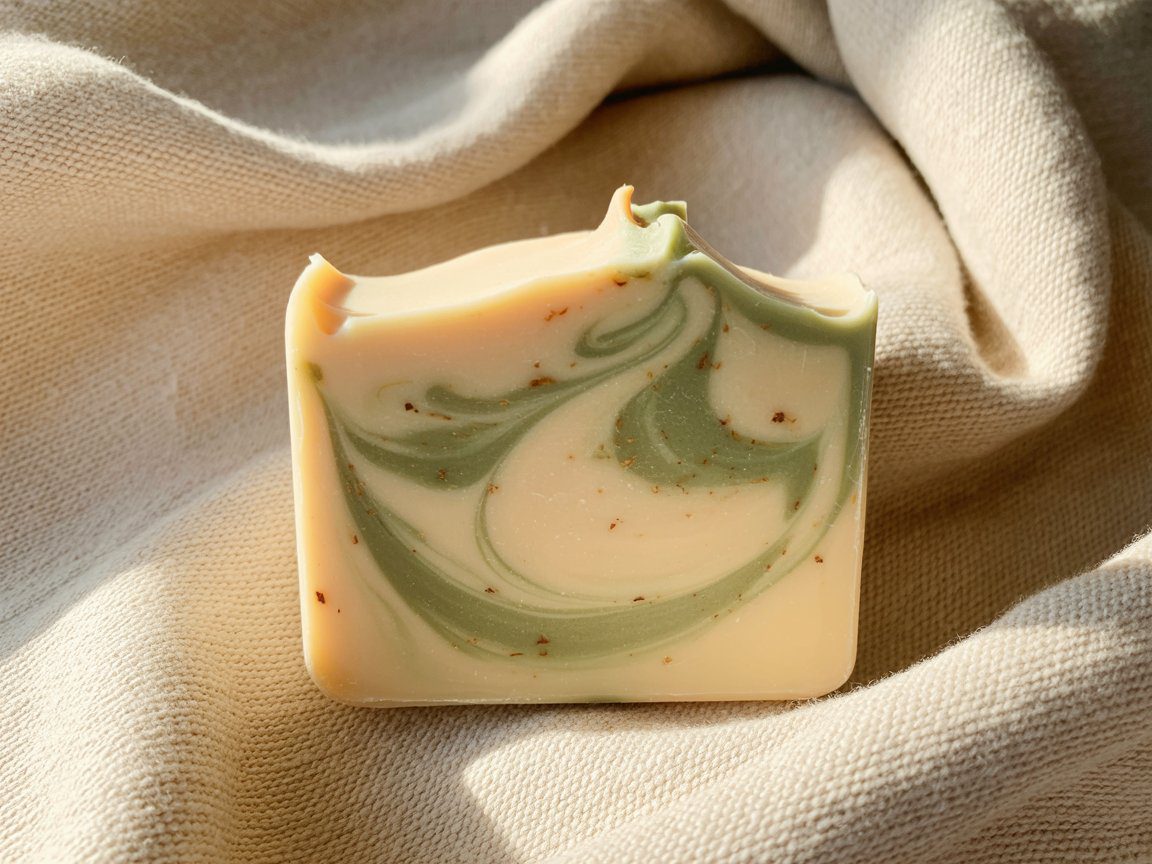
While the lye solution cools, it’s time to incorporate two powerhouse ingredients.
Secret #2: Citric Acid to Combat Soap Scum
Ever used a beautiful handmade soap only to find a grimy film left in your sink? That’s soap scum, caused by minerals in hard water. Citric acid is the solution. As a natural chelator, it prevents this buildup. When a small amount—about 1% of your total oil weight—is added to your liquids before the lye, it transforms into sodium citrate. This sodium citrate binds to the metal ions in hard water so they can’t form soap scum.
The result is a soap that lathers beautifully in any water and leaves your sink clean. As a bonus, it can also help prevent dreaded orange spots (DOS), which signal rancidity, extending the shelf life of your bars.
Note: Citric acid neutralizes a small amount of lye, so you’ll need to add a little extra lye to your recipe. Use a soap calculator with a specific input for citric acid to do the math for you.
Secret #3: Sodium Lactate for a Harder, Longer-Lasting Bar
Sodium lactate is a liquid salt derived from the fermentation of sugars. Pros use it for one huge reason: it helps create a much harder bar of soap that lasts noticeably longer in the shower. If you’ve ever had a homemade soap turn to mush after just a few washes, this is your fix. Sodium lactate accelerates the hardening process, allowing you to unmold the soap sooner—sometimes a full day or two earlier. This provides a cleaner release from the mold with sharp, professional-looking edges. Simply add it to your cooled lye solution at a rate of about 1 teaspoon per pound of oils. Any more can make the bar brittle, but the right amount is the secret to a durable, artisan-quality product.
Secret #4: Castor Oil for a Rich, Stable Lather
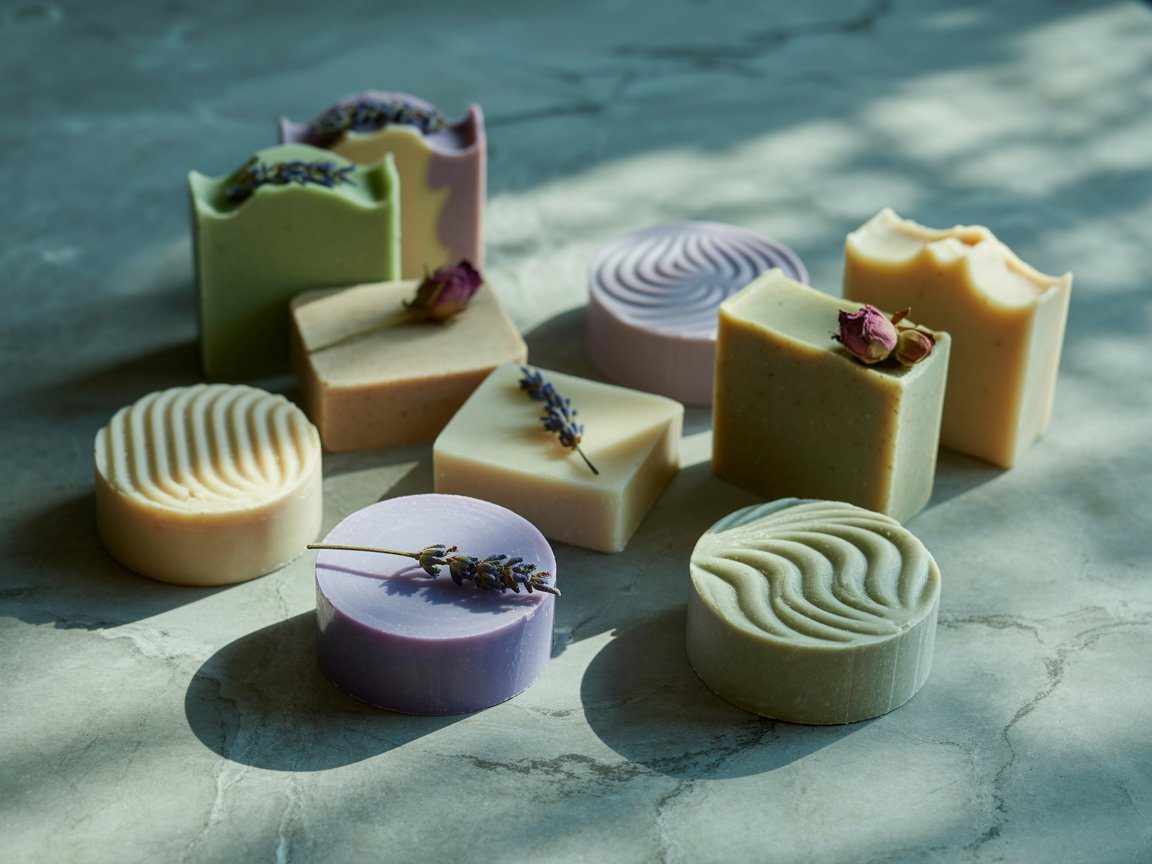
With the lye solution ready, let’s talk about the soul of the soap: the oils. Your oil blend determines everything from hardness to conditioning, but most importantly, it dictates the lather. This is where we find Secret Number Four: Castor Oil.
If you want big, stable, show-stopping bubbles, castor oil is non-negotiable. Its uniqueness comes from a high concentration of ricinoleic acid, a fatty acid that acts as a humectant, drawing moisture to the skin. But its real magic in soap is its power to create and stabilize lather. While an oil like coconut gives you big, flashy bubbles, they can disappear quickly. Castor oil builds a dense, creamy, almost shaving-cream-like foam and makes those big bubbles stick around. It’s the support system for a truly luxurious lather.
You don’t need much; too much can make your bar feel sticky. The sweet spot is between 5% and 10% of your total oil weight. In our recipe—a blend of nourishing olive oil, cleansing coconut oil, and creamy shea butter—castor oil at 8% is the magic ingredient. It ties everything together, ensuring the lather isn’t just bubbly, but rich and decadent. For a smooth process, ensure both your oils and your lye solution are at a similar, cool temperature—around 85 to 95 degrees Fahrenheit—before combining them.
Secret #5: Flaxseed Gel for a Luxurious, Silky Slip
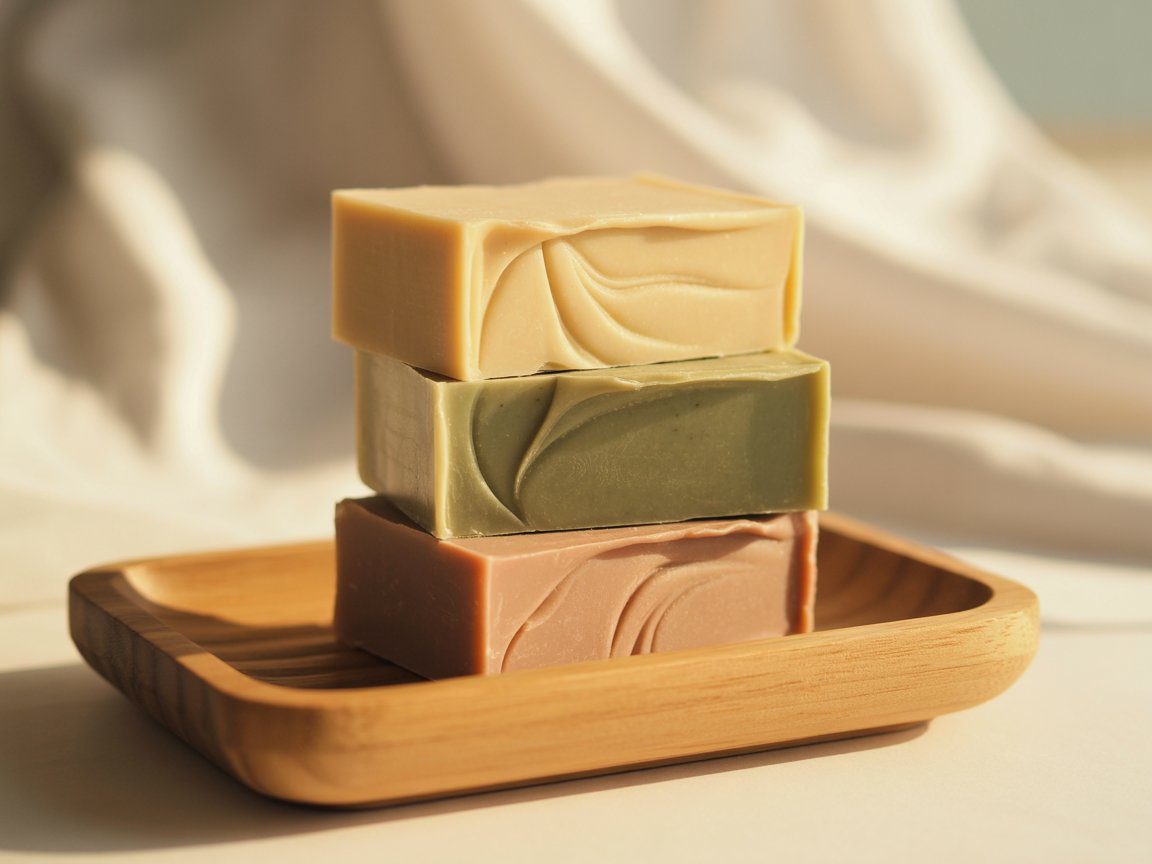
Once the lye solution and oils are combined and stick blended to a light trace (when the batter thickens just enough to leave a trail on the surface), it’s time for the final, most “bougie” secret ingredient.
Secret Number Five is Flaxseed Gel. This is a creative additive loved by artisan soapers for the incredible, silky skin-feel it creates. Making it is simple: boil flaxseeds in water until the water becomes a thick, slippery gel, then strain out the seeds.
Add about one tablespoon of this gel per pound of oils to your soap batter right at trace, just before pouring it into the mold. The flaxseed gel gives the soap what soapers call “slip.” It makes the lather feel slick and smooth, almost like a high-end lotion. It’s that final touch that makes someone use your soap and immediately ask, “What is in this?” Its sole purpose is to add a luxurious, silky texture that feels incredible on the skin.
After blending it in, pour the batter into a loaf mold and add any desired texture to the top for an artisan look. Now comes the hardest part: waiting. Insulate the loaf for 24 hours to let it go through the “gel phase,” where saponification truly happens.
The Final Result: A Perfectly Crafted Bar
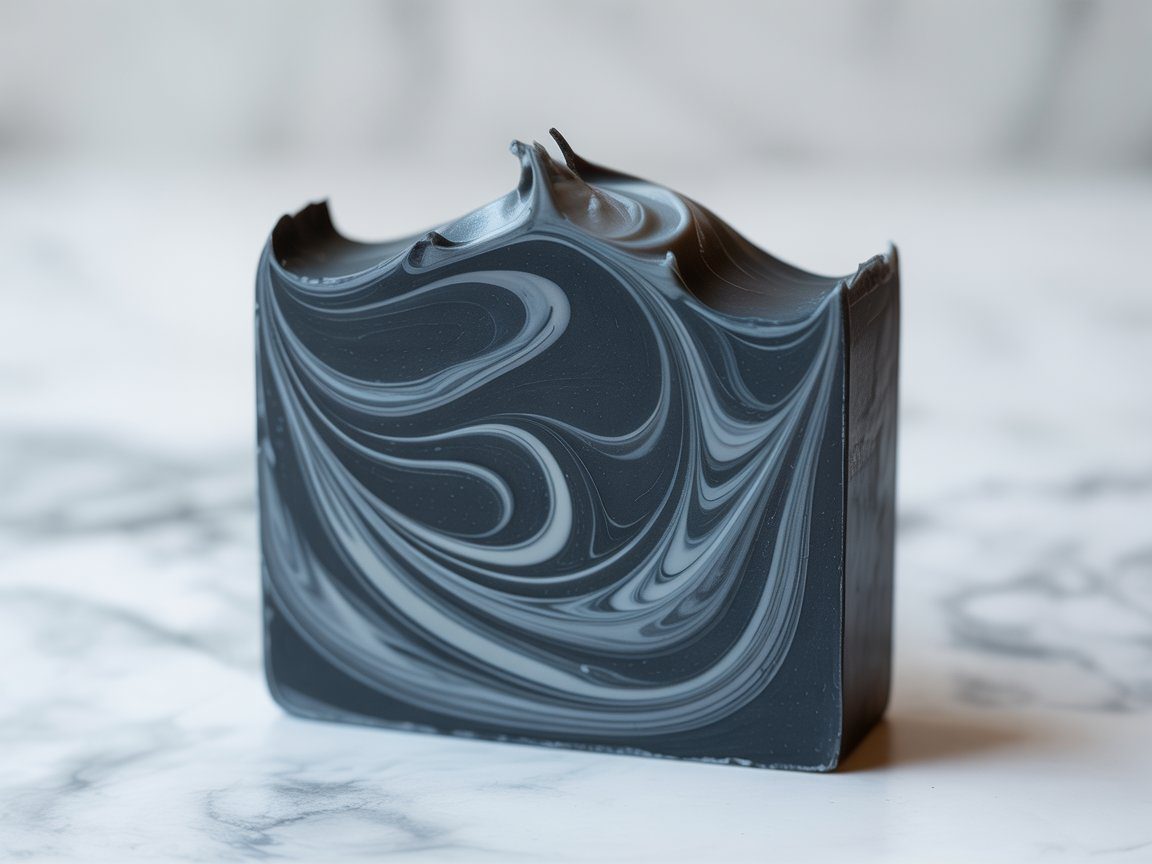
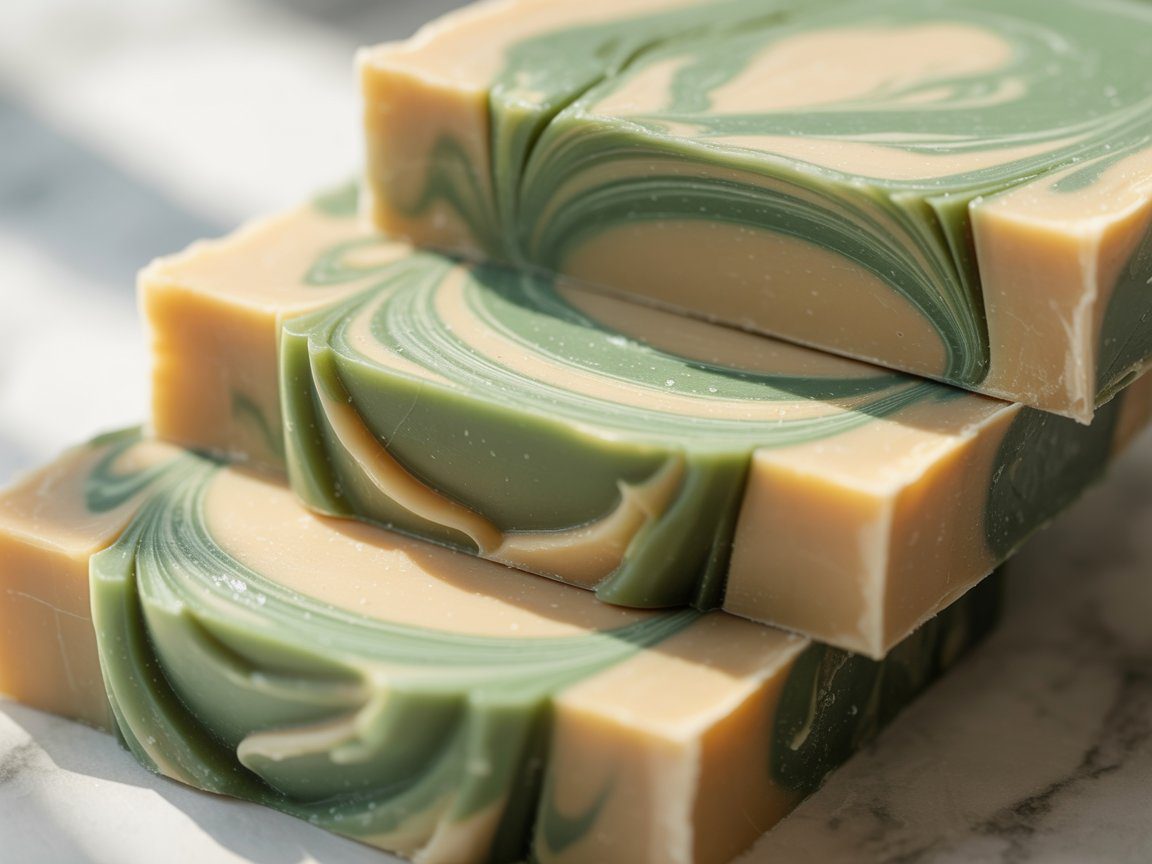
After 24 hours, thanks to the sodium lactate, the loaf will be firm and ready for the most satisfying moment: the cut. Slicing into a fresh loaf reveals a perfectly smooth, creamy interior. There should be no air pockets, the color will be a gorgeous, even white from the goat milk, and the texture will be dense and perfect.
But the real proof is in the lather. To test it, you’ll need a bar that has cured for 4 to 6 weeks, which allows water to evaporate and the bar to become mild and long-lasting. With just a little water, a properly made bar will explode into a thick, stable foam. You’ll notice the large bubbles from the castor oil and the creamy density from the goat milk. Your hands will feel moisturized, not stripped. This is that boutique-level lather—silky, conditioning, and completely luxurious. This is what happens when these five ingredients work in harmony.
Your Blueprint for Incredible Soap
There you have it: the five “secrets” that truly elevate your soap making. To recap:
- Alternative Liquids like goat milk for a creamy, conditioning base.
- Citric Acid to fight soap scum and improve shelf life — find citric acid.
- Sodium Lactate for a harder, longer-lasting, professional-feeling bar — get sodium lactate.
- Castor Oil for an insane, stable, bubbly lather — use castor oil.
- Flaxseed Gel for that final touch of silky, luxurious slip — make it with organic flaxseeds.
You now have the tools to totally transform your soap. The full recipe with exact measurements is provided below so you can try this yourself. When you do, please drop a comment and let us know how it went — we want to hear all about it!
If this guide helped you level up your soap-making game, consider sharing it with a fellow crafter. Now go make some incredible soap.
This website contains affiliate links. Some products are gifted by the brand to test. As an Amazon Associate, I earn from qualifying purchases. The content on this website was created with the help of AI.