
This website contains affiliate links. Some products are gifted by the brand to test. As an Amazon Associate, I earn from qualifying purchases. The content on this website was created with the help of AI.
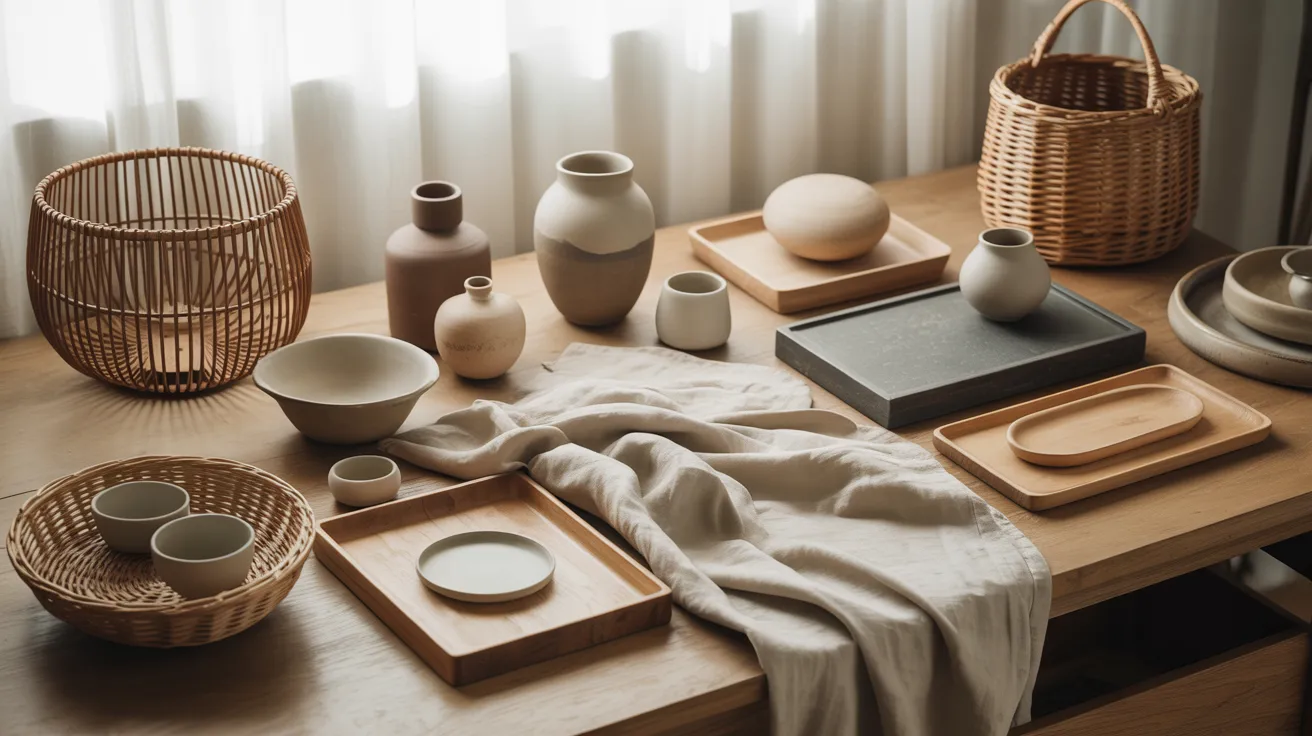
There is a moment when you walk into a perfectly decorated room and feel your whole nervous system relax. That is Japandi. It is not a trend, exactly — it is a philosophy borrowed from two of the world’s most considered design traditions: the warm restraint of Scandinavian design and the mindful simplicity of Japanese wabi-sabi. Both cultures share a reverence for natural materials, honest craftsmanship, and the idea that a well-chosen object in an uncluttered space is more beautiful than a shelf full of things that were never really thought about.
Japandi homes are quiet homes. The palette is dark but never heavy. The furniture is low and grounded. Every texture — linen, rattan, dark wood, matte ceramic — earns its place. There is no empty busyness here. What you see when you walk in is exactly what is meant to be there, and the spaces in between are just as intentional as the objects themselves.
This is your complete Japandi shopping guide. One hundred items, every room, all centered on that particular kind of beauty that comes not from perfection but from presence. Whether you are starting from scratch or just adding to what you already have, these are the pieces that build a home that feels genuinely calm.
Living Room Essentials
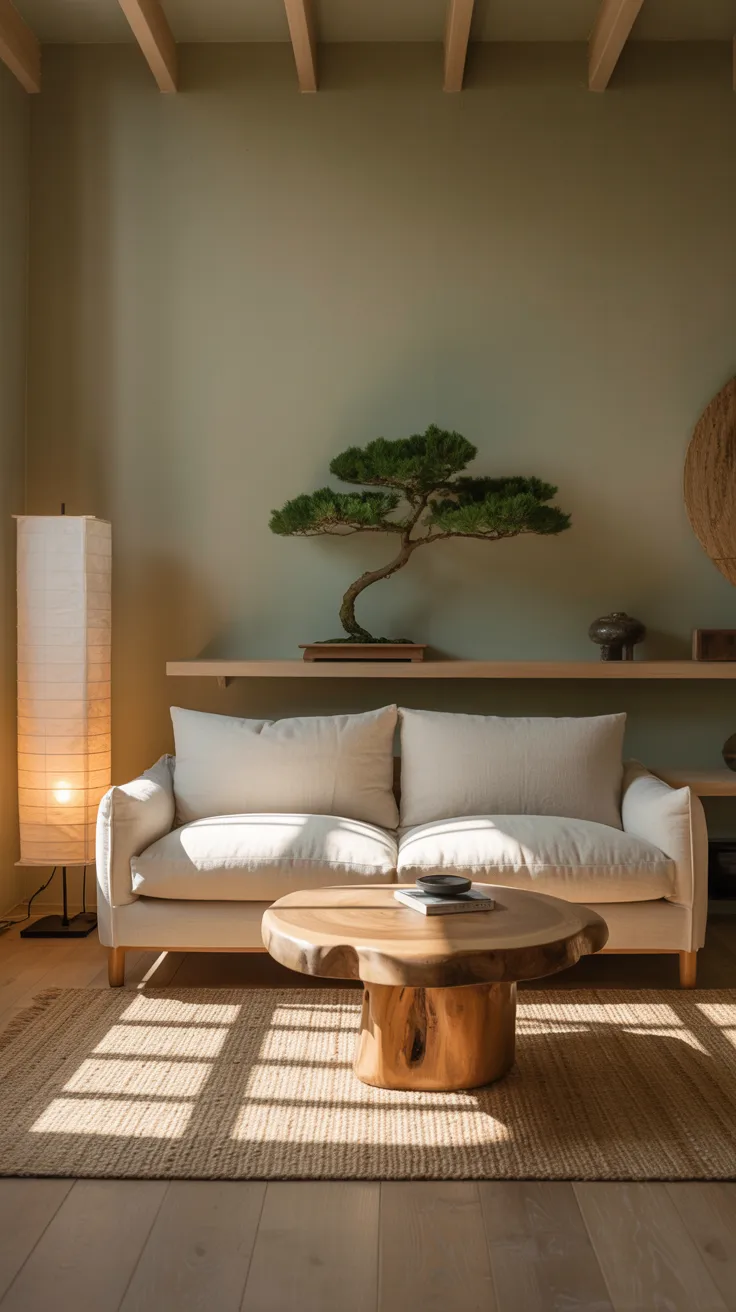
The Japandi living room is low, grounded, and deeply intentional. Furniture stays close to the floor to create a sense of stability and openness. The palette is warm but muted — charcoal, clay, warm white, and the deep warmth of walnut wood. Every piece has a reason for being there, and the space between pieces is never an accident.
- Low-profile sofa in charcoal or warm white boucle — A sofa with a low back, clean lines, and no visible legs — or short, squared-off dark wood legs. Boucle in charcoal, oatmeal, or warm white. The sofa sits close to the floor and anchors the room without dominating it.
- Walnut or dark oak coffee table with shelf below — A rectangular coffee table in dark walnut or smoked oak with a lower shelf for books or a tray. The dark wood against a light rug is the defining Japandi contrast.
- Rattan lounge chair — A single lounge chair in natural rattan with a thin cushion in linen or cotton. It adds an organic, woven texture that warms the room and connects it to nature.
- Washi paper pendant light — An oversized pendant in washi paper or a natural fiber shade with a rounded or elongated form. The diffused light it creates is softer than almost any other fixture — warm, glowing, and deeply calming.
- Linen area rug in warm natural tones — A flat-weave or low-pile rug in warm sand, cream, or soft gray-beige. It should feel like the visual floor of the room, softening hard surfaces and tying the furniture together.
- Low wooden media console — A long, low console in dark walnut or teak with simple sliding doors or no hardware at all. It holds media equipment and hides the clutter with quiet dignity.
- Ceramic table lamp in matte clay or slate — A tall, architectural table lamp in a matte ceramic glaze — clay, slate, or off-white — with a minimal linen shade. It creates warm pools of light rather than flooding the room.
- Wooden tray with bonsai or small plant — A rectangular tray in dark wood holding a bonsai, a small moss ball, or a single succulent. It is a still life arranged with intention — the living room’s quiet focal point.
- Chunky linen throw in earthy tones — A throw in undyed linen, clay, or charcoal folded over one end of the sofa. Japandi layers texture, not color.
- Floor cushion in cotton or linen — One or two oversized floor cushions in solid earthy tones for extra seating at the coffee table. Low seating encourages a different relationship with the room.
- Bamboo or blackened steel floor lamp — A tall floor lamp with a simple arc and a minimal shade in paper or black, positioned behind the sofa for reading. Bamboo and steel are both deeply Japandi materials.
- Handmade ceramic decorative bowl — A large low bowl in a matte, crackle glaze — off-white, slate, or charcoal — on the coffee table. It holds nothing or holds a single stone. The imperfection of the glaze is the beauty.
Picture this: a living room where the sofa sits so close to the floor it feels like the ground is welcoming you in. A washi paper pendant globe hangs overhead, glowing warm. A rattan chair angles toward a window. The coffee table holds a dark wooden tray with a bonsai and a ceramic bowl. Nothing is competing for your attention — the room itself is the thing you notice.
Dining Room Pieces
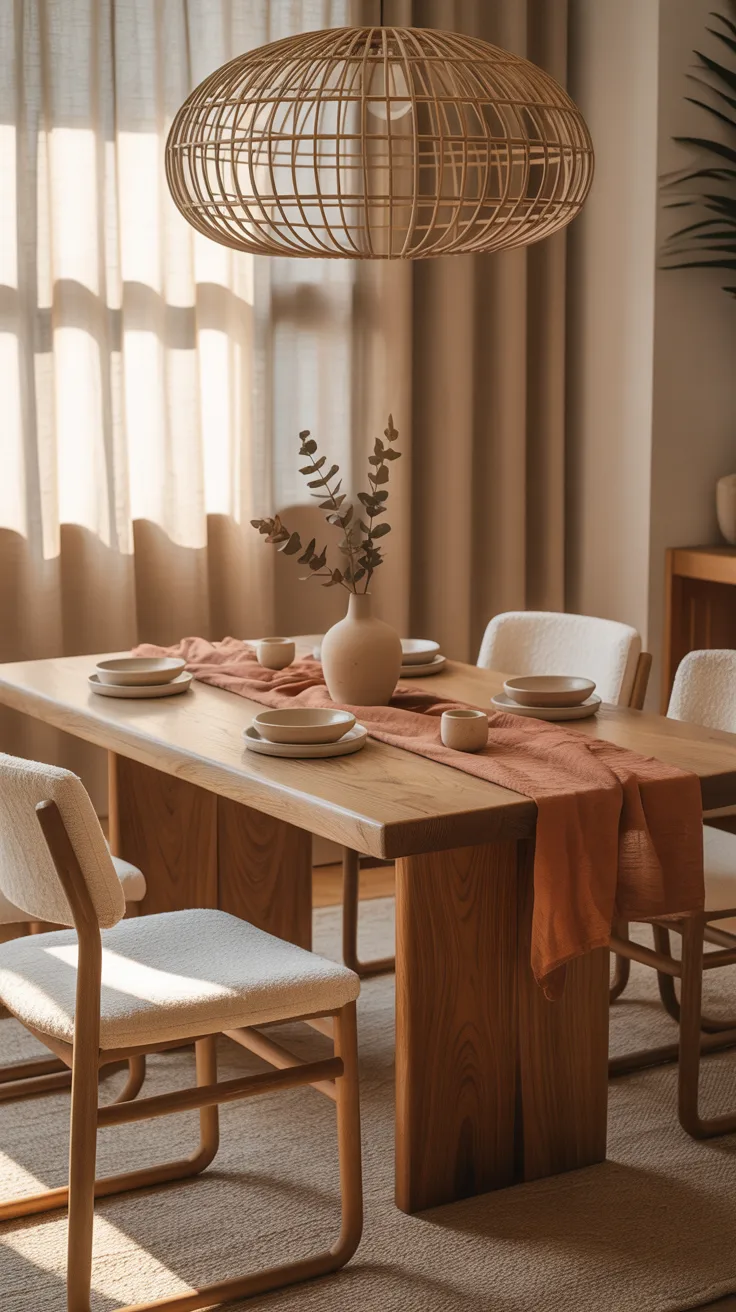
The Japandi dining room is a place for intentional gathering. The table is dark, sturdy, and beautiful without decoration. The chairs are handcrafted. The ceramics are imperfect in the best possible way. This is a room that says the meal — and the people around it — matter.
- Dark walnut or teak dining table — A solid dining table in dark walnut or teak with simple joinery and no ornament. The grain and the darkness do all the work. Seats six without feeling crowded.
- Wabi-sabi ceramic dinner plates — A set of handmade ceramic plates in a matte glaze — warm white, soft slate, or sand — with irregular rims and organic imperfections. They look like they were made by someone who cared.
- Wishbone-style chairs in dark wood — Dining chairs with a wishbone or Y-shaped back in blackened or dark wood. The design is Scandinavian in origin but the dark finish reads deeply Japanese. Six around the table, all the same.
- Pendant light in washi or rattan — A single large pendant, or three smaller ones at staggered heights, in washi paper or open-weave rattan. The light is warm and focused on the table below.
- Linen napkins in charcoal, clay, or undyed natural — Cloth napkins in the palette’s quietest tones. Linen, always. Wrinkled from the wash, set without ceremony.
- Ceramic tea set for the table — A handmade tea set — pot, cups, and a small tray — in a matte glaze. It lives at the center of the table when not in use, as both an object of function and one of beauty.
- Dark wood serving board — A thick cutting board in walnut or acacia that doubles as a serving board for cheese, bread, or charcuterie. The dark wood against white ceramics is the essential Japandi contrast.
- Ceramic serving bowl in organic shape — A wide, low bowl in stoneware with a naturally uneven rim. It holds salad, fruit, or rice and it is the centerpiece of every meal.
- Rattan or bamboo placemats — Flat woven placemats in natural rattan or bamboo under each plate setting. They add texture, protect the table, and connect the table setting to natural materials.
- Dark wood chopstick set with ceramic rest — A set of dark wood chopsticks with a small ceramic rest for each. Whether you use them for eating or simply display them, they signal the Japanese half of Japandi clearly.
- Simple glass water carafe — A clear glass carafe with a minimal shape and no flourish. It replaces the plastic pitcher and lives on the table through every meal.
- Low wooden sideboard with sliding doors — A long, low sideboard in dark walnut with flush-pull sliding doors. It holds linens, serving pieces, and everything else behind closed doors. The exterior is sculpture.
Picture this: a dark walnut table set with ceramic plates in warm white, linen napkins in charcoal, and a ceramic tea set at the center. Three washi pendants hang at different heights above, casting warm, diffused pools of light. A serving board holds a wheel of cheese and sliced bread. The scene is unhurried, deliberate, and exactly right.
Bedroom Sanctuary
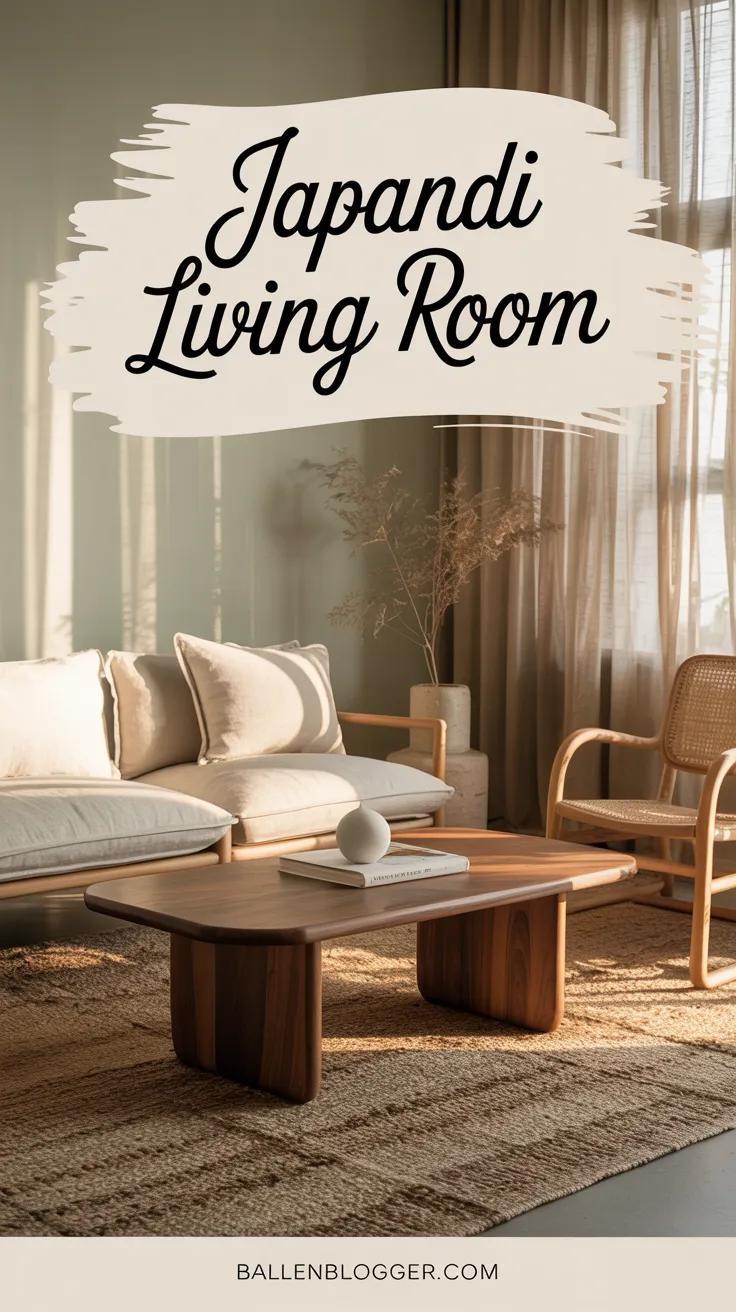
The Japandi bedroom is a sleep sanctuary in the truest sense. The bed is low. The room is quiet. The palette moves from warm white to deep charcoal. Every object is chosen for its ability to contribute to rest, and everything that does not is simply not there.
- Platform bed frame in dark walnut or bamboo — A low platform bed with a simple slatted or solid headboard in dark walnut or bamboo. No footboard, no box spring, no visible metal. The bed sits close to the floor with quiet authority.
- Linen duvet cover in warm white or oatmeal — Stonewashed linen in a color that holds warmth in natural light and softens in lamplight. It gets better with every wash and refuses to look pressed.
- Charcoal or clay linen pillowcases — One or two accent pillowcases in a dark, earthy tone — charcoal, slate, or clay — layered with the white duvet. The contrast is the art.
- Wabi-sabi ceramic bedside lamp — A lamp in an organic ceramic form — slightly uneven, matte-glazed, imperfectly perfect — on a simple bedside table. The light is warm, low, and amber.
- Dark wood floating nightstand — A wall-mounted nightstand in dark walnut. It keeps the floor clear and makes the room feel more spacious. It holds a lamp, a book, and nothing else.
- Linen or wool accent rug beside the bed — A small rug in undyed linen or natural wool beside the bed on the side you wake up on first. Bare feet on something soft is the best possible morning.
- Bonsai or peace lily on the windowsill — A single living plant in a matte ceramic pot. A bonsai for patience, a peace lily for the way it softens a corner with no effort.
- Rattan or woven pendant light — A pendant in woven rattan or natural fiber above or beside the bed as a secondary light source. It creates mood, not task lighting.
- Dark wood wardrobe with minimal hardware — A wardrobe in dark walnut or teak with flush pulls or no visible hardware at all. The grain is the decoration, the storage is the function.
- Cotton or linen throw in deep earth tones — A throw in deep rust, forest green, or dark charcoal folded at the foot of the bed. One bold-ish accent in a quiet room.
- Wooden incense holder with fresh incense — A minimal wooden or ceramic incense holder near the bed. Burning incense at the end of the day is a ritual that signals transition from doing to being.
- Sheer linen curtains in warm white — Long panels of sheer linen that filter morning light into something golden and diffuse. They should pool slightly on the floor.
Picture this: a bedroom with a low walnut platform bed in the center of the room, dressed in stonewashed white linen with two charcoal pillow covers. A wabi-sabi ceramic lamp glows on a floating nightstand. Sheer linen curtains filter morning light across the floor. A bonsai sits in the windowsill. Incense burns somewhere. The room holds its breath.
Kitchen and Dining Accessories
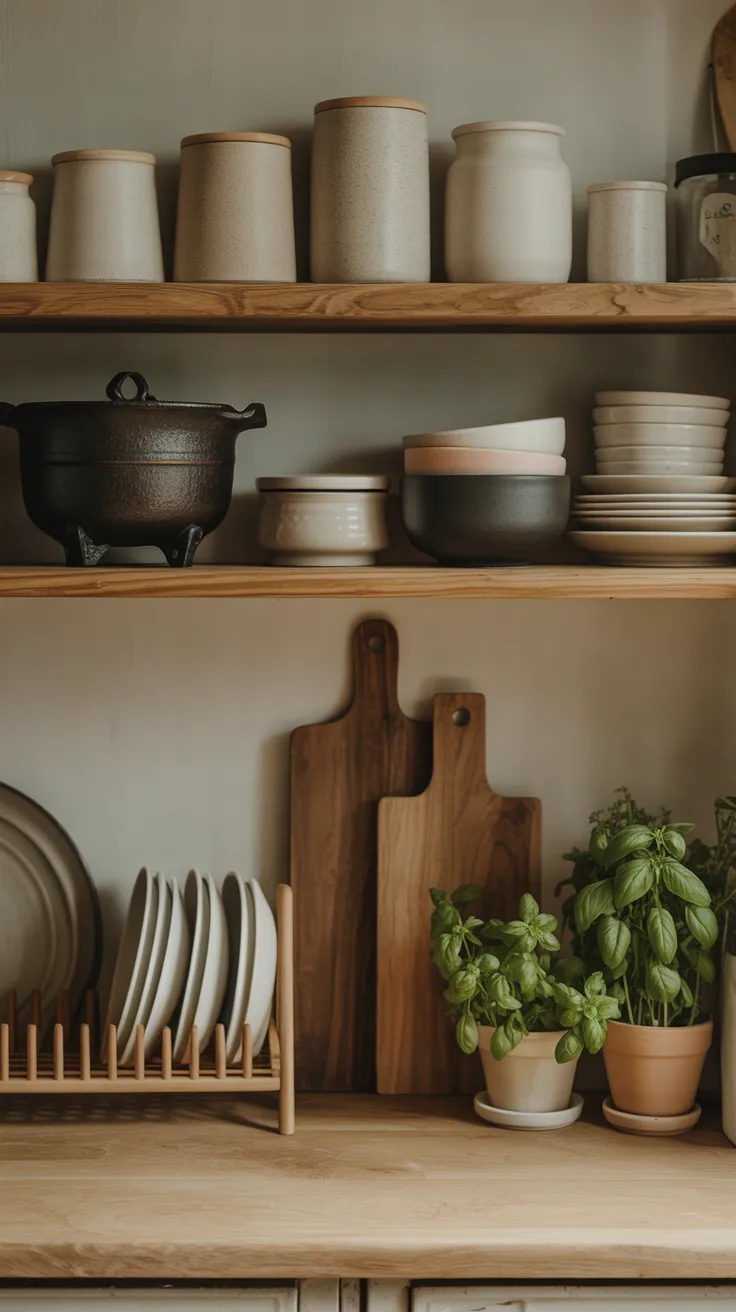
The Japandi kitchen is the rare room that is both a place of work and a place of beauty without apology. Open shelving holds carefully chosen ceramics. Every tool is made from a natural material. The counters are clear, and what lives on them is what gets used every day.
- Open dark wood floating shelves — Floating shelves in dark walnut above the countertop, holding stoneware mugs, ceramic bowls, and a plant. Open shelving forces curation, and curation is the whole point.
- Wabi-sabi ceramic mugs — A set of four to six handmade mugs in warm white, slate, and clay glazes. Each one slightly different, all beautiful, none from a box.
- Dark wood or bamboo cutting board — An oversized cutting board in dark wood or bamboo that doubles as a serving board and leans against the backsplash between uses.
- Matte black gooseneck kettle — A pour-over style kettle in matte black for morning tea or coffee. Slow, intentional, beautiful on the counter.
- Ceramic canister set in matte glaze — A set of matching canisters in matte white or slate for flour, sugar, coffee, and tea. The uniformity creates calm on the counter.
- Bamboo dish drying rack — A compact bamboo drying rack that replaces the plastic one. It looks beautiful, it biodegrades eventually, and it dries dishes just as well.
- Cast iron tea kettle — A Japanese tetsubin-style cast iron kettle in matte black for the stovetop. It heats evenly, retains warmth, and is an object of real beauty.
- Linen kitchen towels with dark stripe — Tea towels in natural linen with a simple dark stripe — charcoal, black, or navy. They hang from a wooden peg and look intentional while sitting still.
- Ceramic bud vase with single stem — A small ceramic vase in a matte clay glaze holding a single stem — a branch, a flower, one dried stalk. Less is always more in the Japandi kitchen.
- Bamboo utensil organizer — A bamboo drawer organizer for utensils, or a bamboo crock on the counter holding wooden spoons, chopsticks, and a spatula. Natural material only.
- Stoneware bowl for the fruit counter — A wide, low ceramic bowl in an organic shape holding seasonal fruit on the counter. Functional and beautiful — exactly how Japandi works.
- Dark wood knife block or magnetic strip — A knife block in walnut or a wall-mounted magnetic strip that keeps knives within reach and adds a material accent to the kitchen wall.
Picture this: a kitchen with dark walnut floating shelves holding an imperfect collection of matte ceramic mugs, a ceramic canister set, and a small plant. A matte black pour-over kettle sits beside a cutting board on the counter. Linen towels with a black stripe hang from a wooden peg rail. The room is both a tool and an artwork.
Home Office Essentials
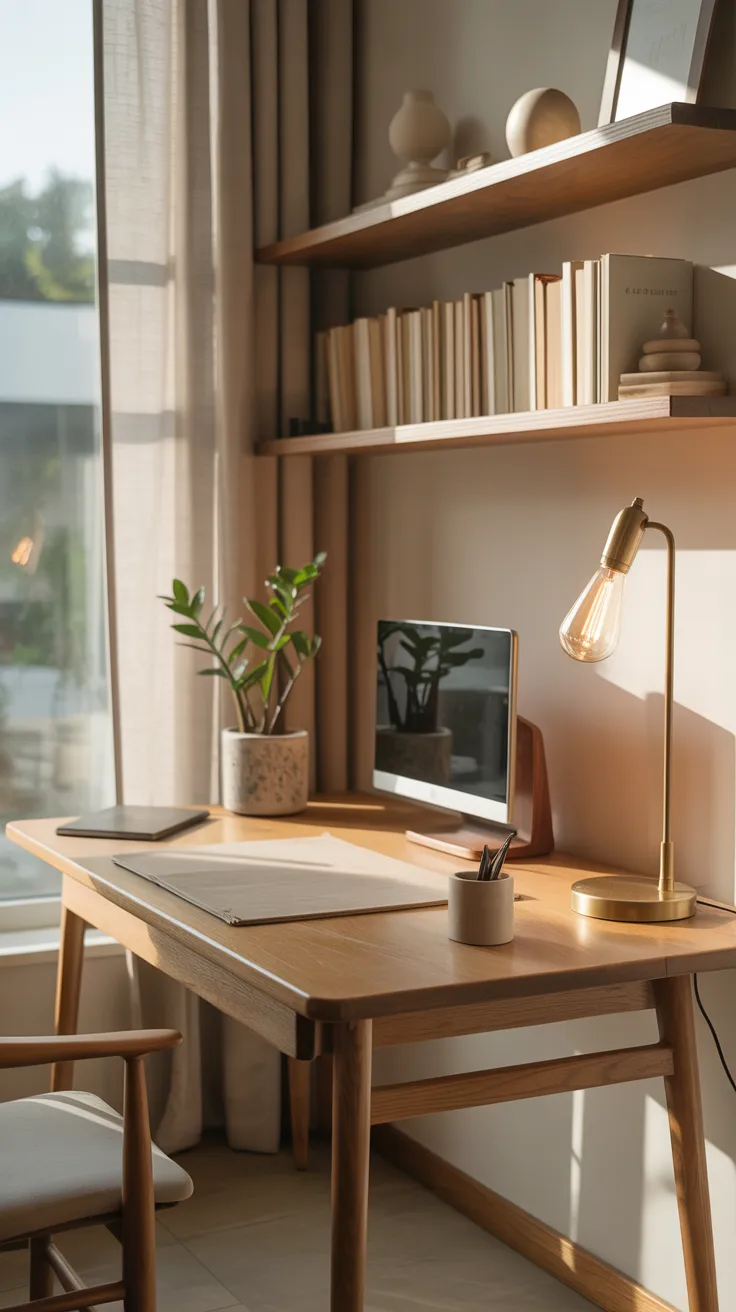
The Japandi home office is a space for focused thought. The desk is simple and dark. The materials are natural. The technology is present but quiet — tucked away rather than displayed. The room should make thinking feel possible.
- Solid dark wood writing desk — A simple desk in dark walnut or bamboo with clean lines, minimal drawers, and a surface that rewards sitting down. No visible cables, no clutter.
- Ergonomic chair with natural upholstery — A task chair with a simple silhouette in natural linen or cotton mesh. It should function well enough that you forget it, and look good enough that you notice it when you stand up.
- Desk lamp with articulating arm in matte black — A focused task lamp in matte black with an adjustable arm. The right light in the right place reduces strain and makes the whole desk look more considered.
- Bamboo or ceramic pen cup — A small container in bamboo or handmade ceramic for pens and pencils. It replaces the plastic cup with something worth looking at.
- Large dark wood or cork desk mat — A full-surface desk mat in cork or leather-wrapped dark wood. It protects the desk and creates a warm, textured surface to work on.
- Woven rattan desk organizer — A small rattan organizer for mail, papers, and notebooks. Natural, minimal, and easy to tuck under the shelf when not needed.
- Framed Japanese-inspired ink print — A sumi-e ink print or simple abstract in black and white in a dark wood or bamboo frame. One piece, one wall, nothing else competing with it.
- Small bonsai or moss terrarium on the desk — A living object on the desk that slows you down. A bonsai requires patience. A moss terrarium requires nothing. Both remind you that some things grow without your intervention.
- Simple wall clock in dark wood — A wall clock with a minimal face, no numbers, and a dark wood or matte black frame. It keeps time without demanding attention.
- Linen cable management box — A fabric-covered or natural fiber box that hides power strips and cables from view. The technology is there, but it is out of sight and out of mind.
Picture this: a dark walnut desk under a window, dressed with a cork mat and a ceramic pen cup. A matte black lamp arcs over the surface. On the wall, a single sumi-e print in a dark frame. A small bonsai sits at the corner of the desk, and the room is so quiet you can hear yourself think.
Bathroom Details
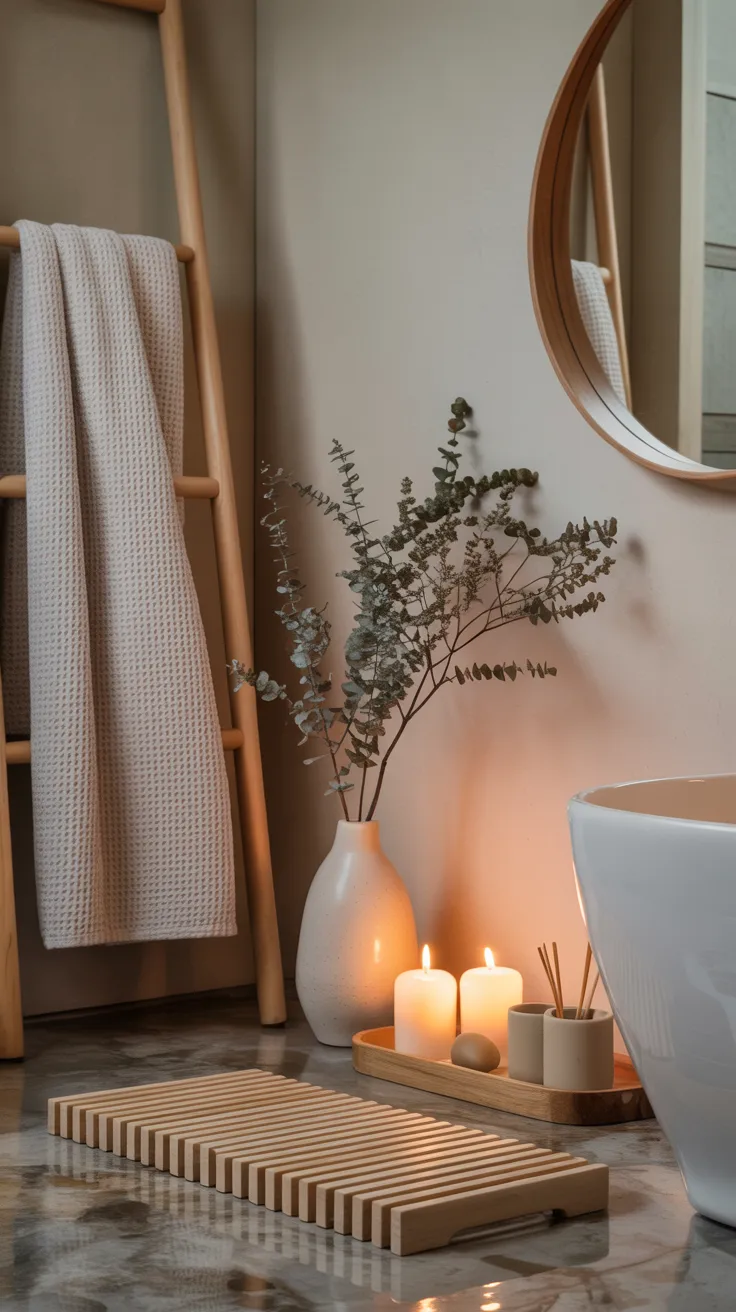
The Japandi bathroom is a ritual space. Every object is chosen for what it does and what it is made of. Dark wood, matte ceramics, linen, and the occasional raw stone create a bathroom that functions like a private spa — without looking like it tried.
- Large round mirror in dark wood or bamboo frame — A round mirror in a dark wood or bamboo frame above the vanity. The circular shape softens the room and the dark frame grounds it.
- Teak shower mat or floor mat — A slatted teak mat that drains and dries naturally, bringing warmth and organic texture to a wet space.
- Matte black ceramic soap dispenser — A pump dispenser in matte black or dark ceramic glaze. It replaces the plastic bottle with a permanent, honest object.
- Linen hand towels in undyed or charcoal — Hand towels in natural undyed linen or a deep charcoal gray. They dry faster than terry cloth and they look deliberate on a simple hook.
- Floating dark wood shelf — A single floating shelf in dark walnut above the toilet or beside the mirror for a candle, a small plant, and a single beauty essential. Minimal storage, maximum intention.
- Stone soap dish or catch-all — A small dish in raw stone, slate, or dark ceramic for bar soap, a ring, or a few small objects. It grounds the bathroom in natural materials.
- Matte black wall hooks — Simple metal hooks in matte black for towels, a robe, or a linen bag. No bars, just hooks — they take up less visual space and they work beautifully.
- Japanese hinoki wood bath bucket — A small hinoki wood bucket or bath scoop. Even if you never use it, it fills the bathroom with the most calming cedar-like scent and signals a bath culture that takes ablution seriously.
- Bamboo toothbrush holder and cup set — A matching set in bamboo or dark ceramic. It replaces the plastic cup on the vanity with something grown from the earth.
- White candle in a ceramic vessel — A pillar candle in white or beeswax inside a simple ceramic container, placed on the shelf or the edge of the tub. The bathroom candle is non-negotiable.
- Linen shower curtain in natural or slate — A linen shower curtain in undyed natural, warm white, or slate with simple metal rings. It softens the bathroom and breathes in a way that plastic never could.
- Small potted fern or air plant — A plant that thrives in humidity near the window or on the shelf. Life in the bathroom is one of the most Japandi touches possible.
Picture this: a bathroom with a round mirror in a dark bamboo frame above a vanity holding a matte black soap dispenser and a stone soap dish. A teak mat covers the floor. Linen towels in charcoal hang from black hooks. On the floating walnut shelf, a white candle burns beside a small fern. The room smells like hinoki and calm.
Outdoor and Entryway
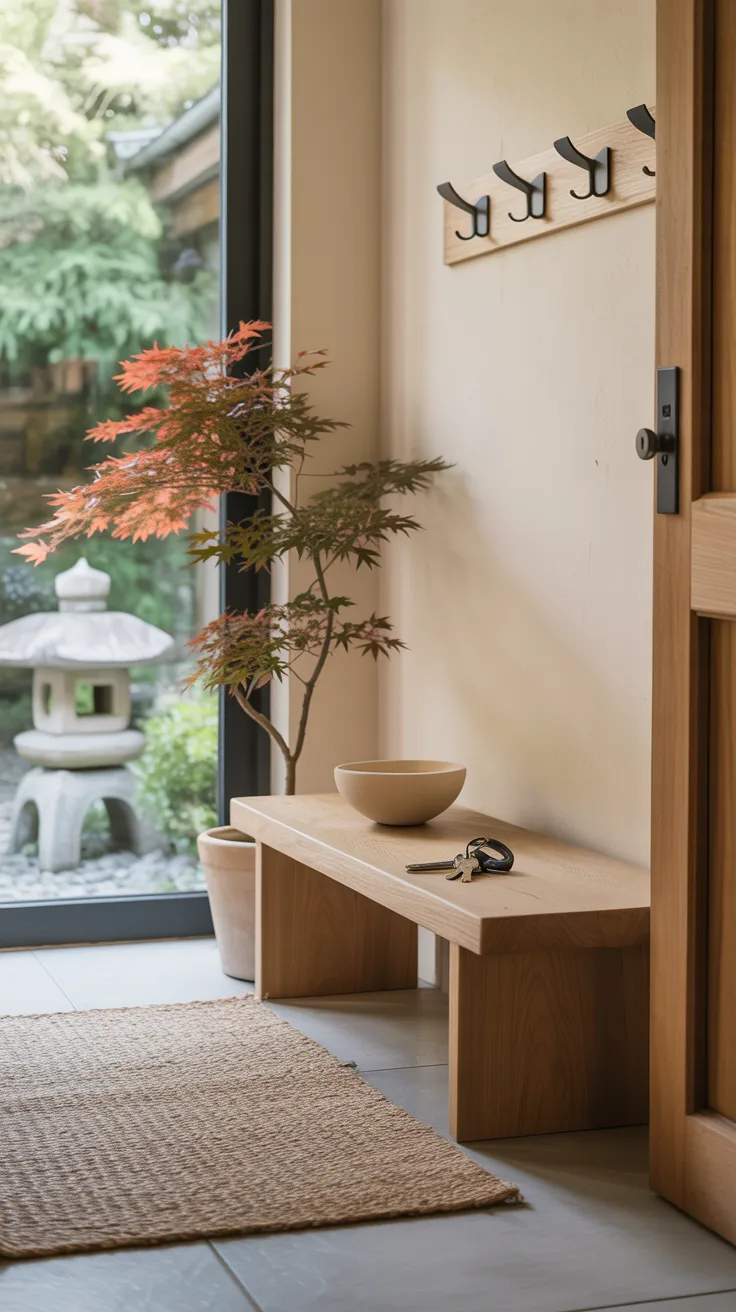
The Japandi entryway is the transition zone — a space that slows you down between the world outside and the world inside. It should be functional without being cluttered, and every object in it should support the decompression that happens the moment the door closes behind you.
- Dark wood entryway bench — A low bench in dark walnut or bamboo for sitting to remove shoes, with a shelf below for footwear. The Japandi ritual of removing shoes at the door starts here.
- Minimalist wall hooks in matte black or dark wood — Three to five hooks mounted at a clean height for coats, bags, and scarves. Simple, architectural, and useful every single day.
- Ceramic or stone catch-all tray by the door — A small, low tray in matte ceramic or raw stone for keys, coins, and earbuds. Everything finds its home before you step all the way in.
- Natural jute or seagrass doormat — A flat, natural fiber doormat in jute or seagrass. Rectangular, no text, no pattern. Just a natural material doing its job at the threshold.
- Tall rattan or bamboo umbrella stand — A slim stand in rattan or bamboo for one or two umbrellas. Tall and narrow, it takes almost no space and it looks exactly right in a Japandi entry.
- Low wooden shoe cabinet — A cabinet in dark wood with doors that close completely, hiding all shoes behind a clean face. The exterior should look like furniture, not storage.
- Single branch in a tall floor vase — A sculptural branch — twisted willow, bare cherry, or dried maple — in a tall, narrow dark ceramic floor vase beside the door. One gesture, maximum impact.
- Outdoor plant in a dark ceramic pot — A single plant in a large, matte dark ceramic pot beside or just outside the front door. A clipped boxwood, a lemon cypress, or a simple grass.
- Washi paper lantern for the porch — A large washi paper lantern hung from the porch ceiling or a wall bracket for outdoor candlelight at night. Simple, beautiful, Japandi to its core.
- Dark wood key organizer — A wall-mounted key holder in dark wood with three or four simple hooks. Small and deliberate — the last thing you touch before you leave.
Picture this: a front entry with a dark walnut bench, three matte black hooks on the wall holding a coat and a canvas bag, and a ceramic tray on the bench holding keys. A sculptural branch rises from a tall floor vase beside the door. The jute mat at the threshold is the border between outside and in. The transition takes ten seconds and it is the best part of coming home.
Accent Pieces and Art
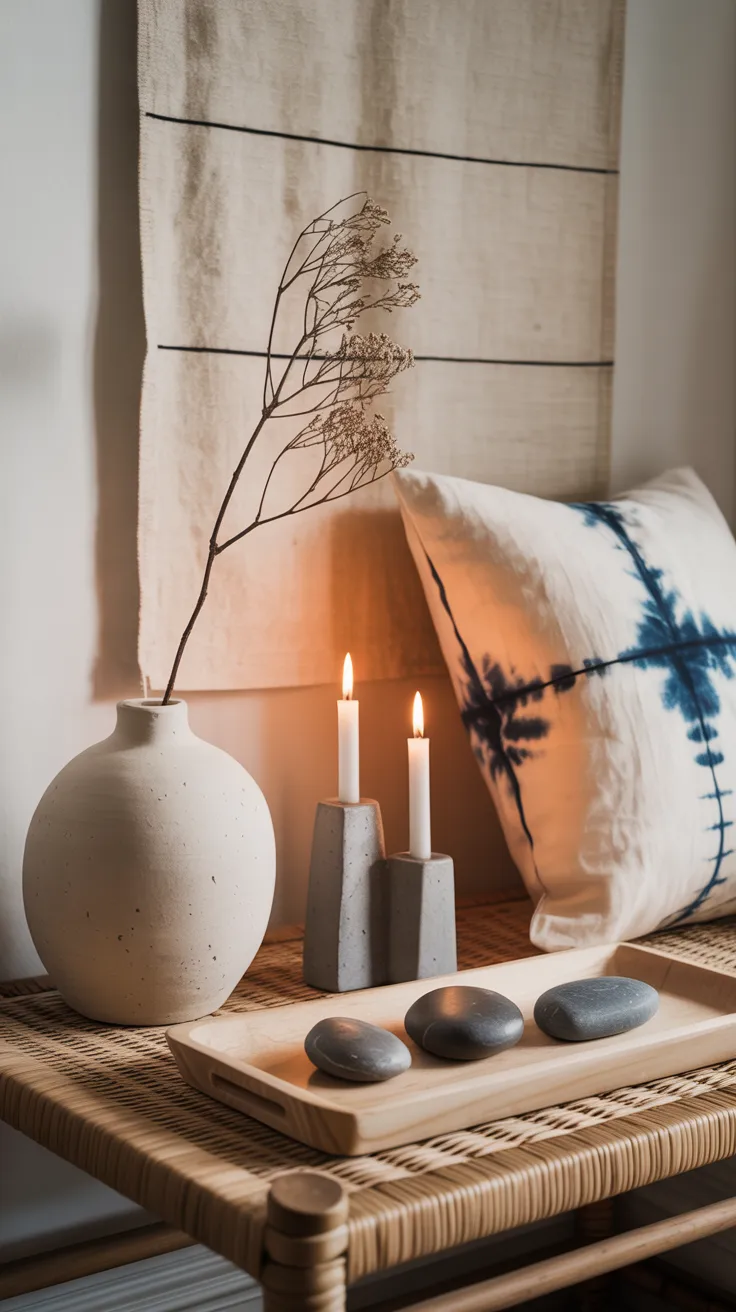
Japandi accents are thoughtful to the point of restraint. One print. One ceramic. One plant. One thing that was brought back from somewhere. The objects in a Japandi home have weight — not physical weight, but the weight of intention. They were chosen, not accumulated.
- Sumi-e or brush stroke art print — A print of Japanese calligraphy, an ink brushstroke, or a minimal nature study in black ink on white paper, framed in dark wood or bamboo. It is all the art the wall needs.
- Ceramic ikebana vase — A low, asymmetric ceramic vase designed for ikebana flower arrangement. It holds one or two stems arranged with space as intentionally as the stems themselves.
- Woven wall hanging in natural fibers — A textile wall piece in jute, cotton, or wool in earthy, undyed tones. It adds acoustic softness and brings handcraft into the room.
- Dark wood floating shelf display — A single dark wood shelf at eye level with a bonsai, a ceramic object, and a single candle. The shelf is a tiny landscape — composed, not collected.
- Natural stone or ceramic candle holder — A thick stone or ceramic vessel holding a pillar candle. The weight of it on the table adds physical grounding to the space.
- Dried botanical arrangement — A few stems of dried pampas, black-painted branches, or preserved Japanese maple in a dark ceramic vase. The restraint of dried botanicals is deeply Japandi.
- Linen cushion covers in earthy tones — Cushion covers in two or three tones from the palette — clay, slate, and undyed natural — on the sofa or bed. Texture, not pattern.
- Small raku-fired ceramic sculpture — A small, irregular ceramic form in a dark, crackled glaze. Raku firing is a Japanese tradition that celebrates the beauty of imperfection and each piece is unique.
- Bamboo or reed diffuser — A simple reed diffuser in a clear glass vessel with dark reeds, placed on a shelf or nightstand. The fragrance is part of the environment — hinoki, sandalwood, or forest moss.
- Pebble or stone collection in a low bowl — A few smooth river stones or dark pebbles arranged in a shallow ceramic bowl. Nature brought inside, arranged with care, and requiring nothing from you.
Picture this: a shelf with a dark wood surface holding a small bonsai, a ceramic ikebana vase with two stems of dried grass, and a stone candle holder with a burning pillar candle. On the wall above it, a single sumi-e brushstroke print in a dark frame. The shelf is a sentence with no extra words.
The Japandi Color Palette
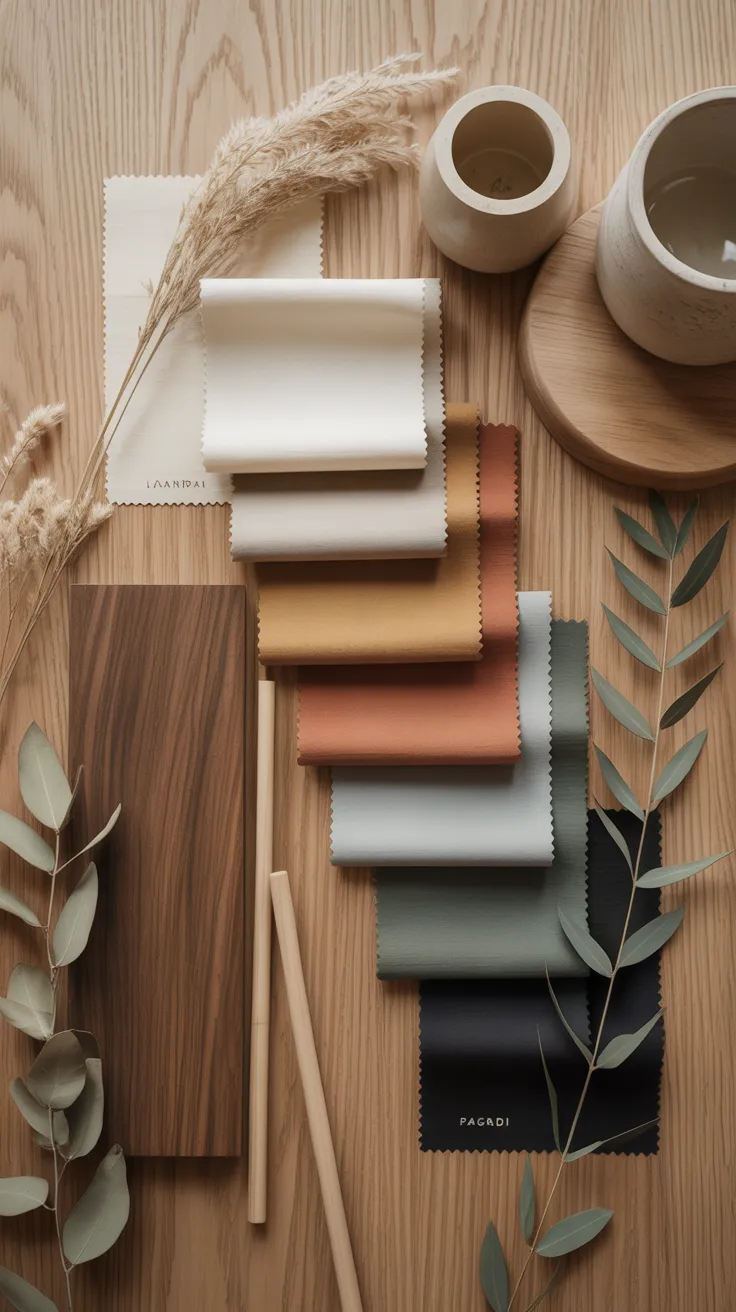
Japandi’s palette is deeper and earthier than pure Scandinavian, warmer and more tactile than pure Japanese minimalism. It is a palette of found things — the color of raw clay, the darkness of old wood, the gray-white of a winter sky. Getting these tones right is what makes a Japandi room feel cohesive.
- Warm white and washi white — Walls in a warm, slightly creamy white — not bright white, which reads cold. The warmth in the white is what makes the dark woods glow.
- Dark walnut and smoked oak — The primary wood tones: deep brown-black walnut and the warm gray of smoked oak. These are the anchor materials that give Japandi its depth.
- Matte black — Hardware, lighting fixtures, and accent pieces in matte (never glossy) black. It is the sharpest point of contrast in the palette.
- Clay and terracotta — A warm, mid-tone accent color in textiles and ceramics. Clay is neither orange nor brown — it is the tone of the earth right before it dries.
- Slate and soft charcoal — Deeper tones for upholstery, linens, and secondary furniture. Slate has blue in it; charcoal is warmer. Both are more interesting than gray.
- Undyed natural linen — The color of linen left unbleached. It is the softest, warmest white there is and it makes every other tone in the room settle.
- Forest and moss green — Used sparingly in a plant, a single textile, or one ceramic glaze. The green in a Japandi room is never bright — it is the green of deep shade.
- Warm sand and buff — Lighter accent tones in ceramic glazes, rugs, and wood objects. They keep the palette from getting too dark and bring a little light back in.
Picture this: a home where warm white walls meet dark walnut furniture in every room. Matte black hardware punctuates doorframes and light fixtures. A clay ceramic mug sits on a slate linen table runner. The linen on the bed is undyed and rumpled. A single fern brings forest green to a dark corner. The palette is a deep breath held quietly before being released.
One hundred items. Eight rooms. One philosophy that finds beauty not in accumulation but in selection — not in the perfectly styled room but in the room that was designed to be lived in with full attention.
Japandi is not a look you achieve once and then maintain. It is a practice. You buy less and choose better. You let natural materials age and develop their own patina. You allow a single branch in a vase to be enough decoration for an entire corner. You let imperfection stand because in wabi-sabi, imperfection is where the beauty lives.
Start with the anchors: the bed, the sofa, the dining table. Choose dark wood where Scandinavian might choose light. Layer natural textiles in earthy, muted tones. Add one plant, one candle, one ceramic object that you love for its own sake. And then stop. The space between your choices is where Japandi breathes.
This website contains affiliate links. Some products are gifted by the brand to test. As an Amazon Associate, I earn from qualifying purchases. The content on this website was created with the help of AI.
