
This website contains affiliate links. Some products are gifted by the brand to test. As an Amazon Associate, I earn from qualifying purchases. The content on this website was created with the help of AI.
I always thought making soap from scratch was for experts only. I was genuinely scared of the chemicals and convinced I’d mess it up, imagining smelly, orange blocks of utter failure. But on my very first try, using one specific technique, I created a perfect, creamy, luxurious bar of goat’s milk soap. It’s gentle, beautiful, and was shockingly straightforward to create.
You know those beautiful, artisan bars at farmers’ markets? They have an incredible, rustic charm and feel so substantial in your hand. For years, I put the people who made them on a pedestal, telling myself their craft was a secret art form. I’d watch videos and read blogs, and my intimidation would only grow. The comment sections were filled with warnings about “lye,” a caustic chemical that could cause severe burns, and forums were haunted by pictures of failed batches—soupy messes or soaps that turned a bizarre, angry orange from scorched milk.
But the idea wouldn’t leave me alone. I craved that feeling of self-sufficiency, of creating something so practical and beautiful with my own two hands. I especially dreamed of making goat’s milk soap, which is legendary in skincare for its incredible moisturizing properties. The thought of having an endless supply was just too tempting. So, I decided to face my fears. This is the story of how I did it, and it’s your roadmap to do the same.
The Challenge and The Game-Changing Plan
My journey started with research, and I soon realized that making cold process soap, especially with delicate goat’s milk, all comes down to one thing: temperature control. Soap making is a chemical reaction called saponification, where you mix fats and oils with an alkali (lye). The catch? When lye dissolves in a liquid, it gets hot—almost boiling.
With water, that heat isn’t a huge problem. But milk, with its natural sugars, will scorch. This was the number one beginner mistake I saw everywhere.
Then, I found the game-changer: the frozen milk method. By starting with frozen milk, the lye’s intense heat is spent just melting the milk instead of scorching it. This simple solution keeps the temperature down, preserving the milk’s creamy-white color and its skin-loving benefits. This was my ticket to success.
Gearing Up for Success
With my method chosen, it was time to gather my gear.
Safety First (Non-Negotiable):
Lye is caustic and demands respect, but you don’t need to be terrified. With the right precautions, it’s totally manageable.
- Goggles: Not glasses—goggles that seal around your eyes to protect from any splash.
- Heavy-Duty Gloves: These offer far more protection than thin disposable ones.
- Full Coverage: Wear long sleeves and pants. No exposed skin is the goal.
I also cleared my workspace completely, ensuring no kids or pets could wander in. Taking safety seriously is what makes the process stress-free.
Essential Equipment:
I gathered items that would be dedicated only to soap making to avoid cross-contamination with kitchen utensils.
- Digital Kitchen Scale: This is absolutely critical. Soap recipes are measured by weight for accuracy, not volume.
- Heavy-Duty Plastic Pitchers: Look for the #5 recycling symbol.
- Stainless Steel Pot: For melting your oils.
- Silicone Spatula
- Stick (Immersion) Blender: This cuts the stirring time from hours down to just minutes.
- Silicone Loaf Mold
With my station prepped and my fears calmed by a solid plan, I was ready.
My Step-by-Step Soap Making Journey
This is where the fun really begins. Remember, soap making is chemistry, and precision is your best friend.
Step 1: Meticulous Measurements
Using my digital scale, I measured everything.
- Hard Oils: I chose a classic combo of coconut oil (for a hard bar and bubbly lather) and shea butter (for luxury and creaminess).
- Liquid Oils: I used a generous amount of gentle olive oil and a splash of castor oil—a secret weapon for a stable, creamy lather.
I measured them all into my stainless steel pot.
Next, the main event: the frozen goat’s milk and the lye. The day before, I had measured and frozen my goat’s milk into ice cube trays. I placed a heat-safe pitcher on my scale, filled it with the frozen milk cubes, and put the whole pitcher into my kitchen sink, which I’d filled with cold water for an “ice bath.”
Step 2: The Moment of Truth (Mixing the Lye)
Goggles on, gloves on. I carefully measured my lye crystals. The number one rule is: always add the lye to the liquid, never the other way around.
Very slowly, I started sprinkling the lye over the frozen milk cubes, stirring gently. The reaction started immediately. I kept adding the lye in small batches, stirring constantly in a well-ventilated area. This part requires patience. After about ten minutes, the lye was fully dissolved, and the milk was a beautiful, pale ivory color. No browning, no awful smell. The frozen milk method had worked perfectly!
Step 3: Uniting the Ingredients
Meanwhile, I gently heated my pot of oils until they were just melted and then took them off the heat. You want your lye-milk and oils to be at a similar temperature (around 90-100°F).
With my temperatures aligned, I carefully poured the lye-milk mixture through a small strainer into the pot of oils. I put my stick blender in, tilted it, and tapped it on the bottom of the pot to release trapped air bubbles—a little trick called “burping” the blender.
The Magic Moment: Trace and The Big Reveal
Then, I started blending in short bursts. Almost instantly, the oils and lye-milk began to emulsify, transforming into a creamy, uniform blend. I kept up my pulse-and-stir pattern, and within a minute or two, I started looking for “trace.”
Trace is the point where the oils and lye are emulsified for good. It’s your green light to pour. When you lift the blender, the batter drizzling back onto the surface should leave a faint, visible trail. And there it was—a distinct, delicate trail on the surface. Success!
I gave the batter one last stir and poured the creamy liquid into my silicone loaf mold. I tapped the mold on the counter a few times to release air bubbles and created a simple, textured top with the back of a spoon.
The soap now needed to sit for 24 to 48 hours to harden. To keep the color extra light, I popped it in the fridge for about 12 hours before leaving it on the counter.
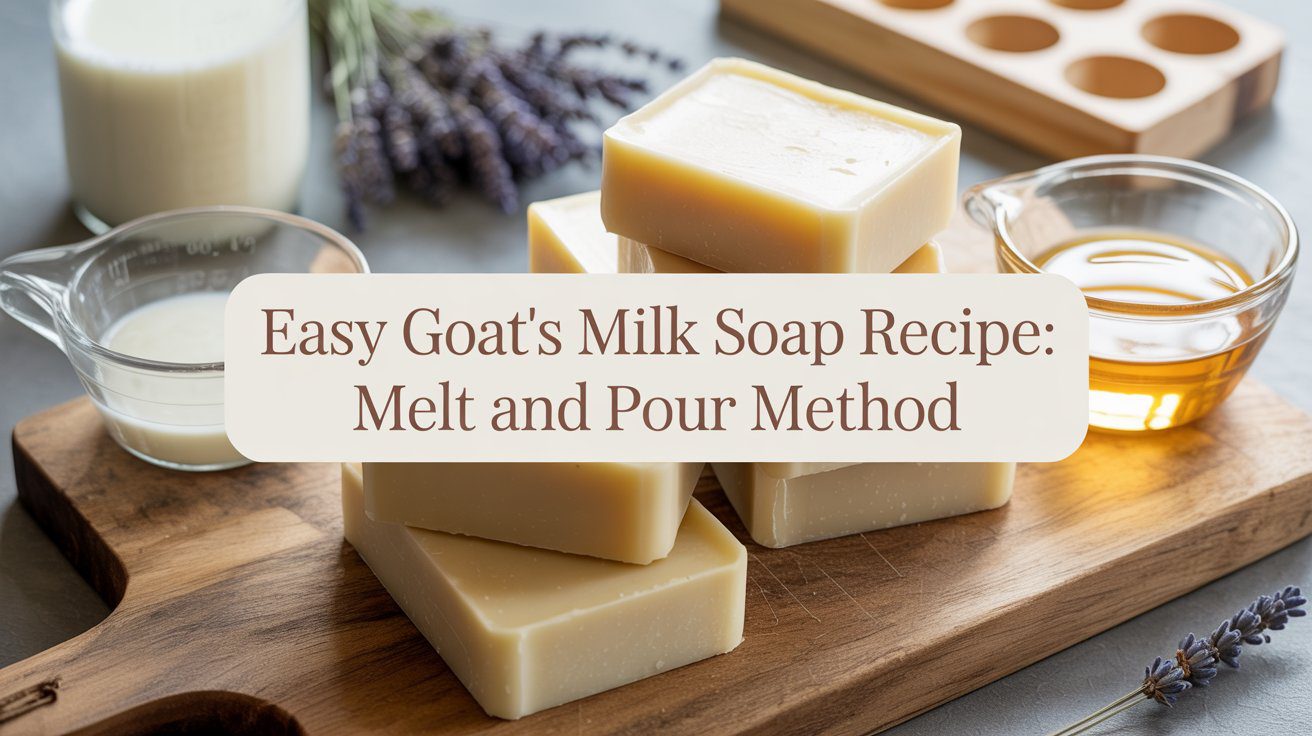
The next day was the moment of truth. I gently pulled back the sides of the mold, turned it over, and out slid a perfect, solid, creamy-white loaf of soap. It was firm, smooth, and beautiful. I had done it. I was a soap maker.
The Final Step: Patience and The Perfect Cure
Holding that loaf was incredible, but the journey wasn’t quite over. The final, and perhaps most important, step is curing. Freshly made soap is still soft and full of water. Curing is simply letting the soap bars rest in a cool, dry place with good airflow for four to six weeks. During this time, excess water evaporates, making the bar harder and longer-lasting. This process also results in a milder bar with a more luxurious lather.
I took a sharp knife and sliced my loaf into thick, rustic bars. The inside was just as perfect as the outside. I arranged them on a baking rack and tucked them away in a cool, dark closet to cure.
Looking at these bars now, I can’t believe I was ever scared to try this. The process that seemed so mystical turned out to be a straightforward and deeply rewarding science. By respecting the chemicals and following that game-changing frozen milk technique, I got a perfect result on my very first attempt.
If you’ve ever been on the fence, I hope this inspires you. If I can do it, you absolutely can too. The feeling of using a beautiful bar of soap that you made with your own two hands is simply unmatched.
Your Turn: Recipe & Supplies
I’ve put the exact beginner-friendly recipe I used, plus a full list of all the tools and supplies you’ll need, right here for you to follow along.
If you found this helpful, I would absolutely love to hear about your soap-making adventures in the comments. Let me know how your first batch turns out! Happy soaping
This website contains affiliate links. Some products are gifted by the brand to test. As an Amazon Associate, I earn from qualifying purchases. The content on this website was created with the help of AI.

